





Register to get free articles
Want unlimited access? View Plans
Already have an account? Sign in
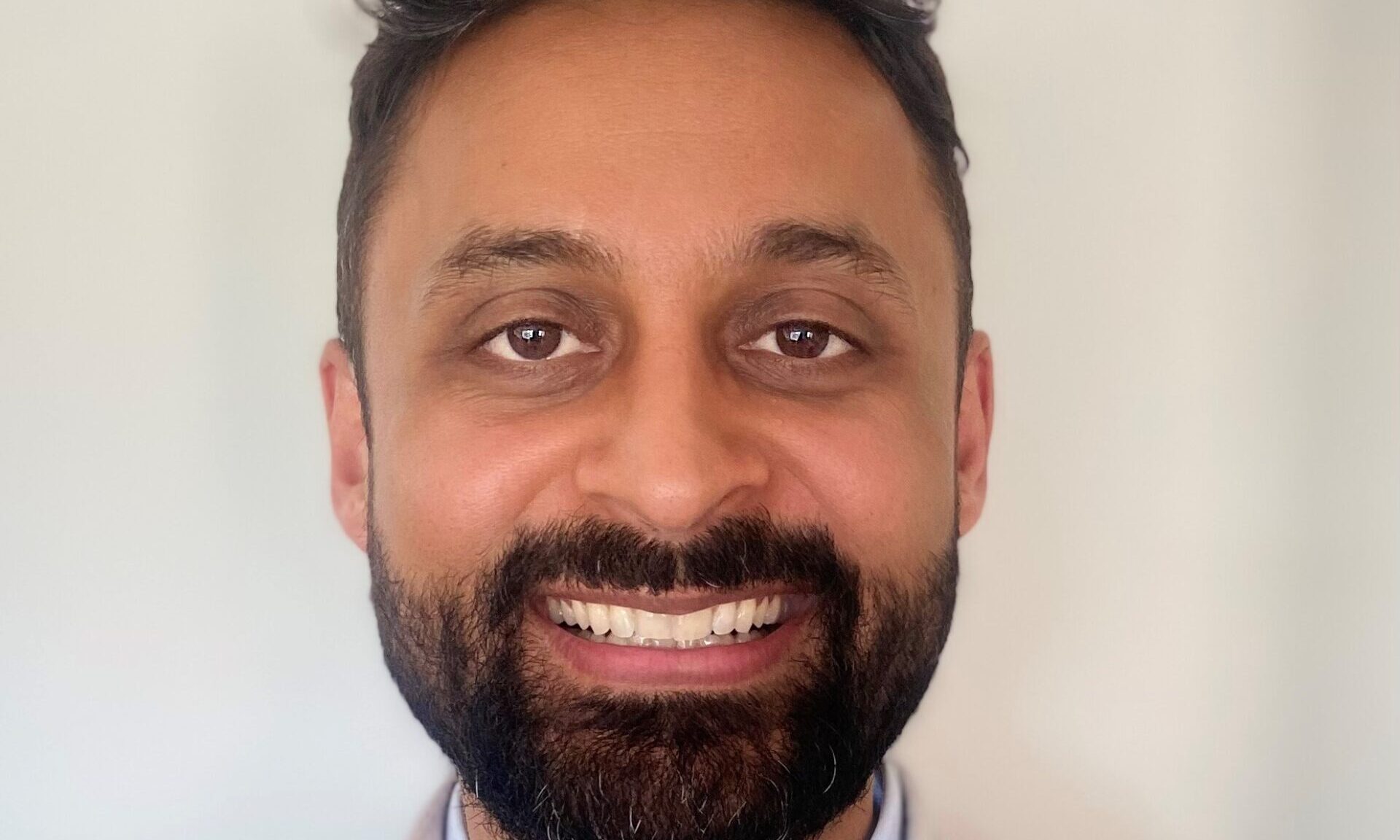
When Eugene Amo-Dadzie leaves the office, he swaps spreadsheets for spikes. By day, he is a senior chartered accountant and by night one of Britain’s fastest men, clocking a personal best of 9.93 seconds for the 100 metres. Known to many as “The World’s Fastest Accountant”, Amo-Dadzie represents an unlikely intersection between the worlds of elite sport and professional finance. Yet, for him, the two are more alike than they seem.
Currently competing at the World Athletics Championships while continuing his day job, Amo-Dadzie has built a career on balancing precision, consistency and performance. Those same qualities, he says, lie at the heart of both sprinting and accounting. “Structure is everything. The discipline of accountancy helps me stay organised, while athletics gives me the resilience to perform under pressure,” he explains.
It is a balance that demands not only focus but also a growing appreciation for technology. Alongside his athletic career, Amo-Dadzie has become an advocate for artificial intelligence (AI) in finance, championing its potential to make accountants faster, smarter and more strategic – an outlook that mirrors his own pursuit of continuous improvement.
Amo-Dadzie’s journey into finance began conventionally enough. “I studied accountancy at university and qualified while working as a finance assistant, before holding roles across industries from music to property and professional services,” he says. “I’ve always been drawn to accounting for its mix of logic, structure and problem solving – qualities that have always come naturally.”
Sprinting, on the other hand, was a later discovery. “I only realised I had elite potential in my late-twenties. Since then, I’ve been balancing both careers: my full-time accounting day job with athletics training and competitions that take me all over the world,” he says.
While others might see two separate worlds, Amo-Dadzie views them as complementary. “Sport is unpredictable. One week you might be at your best, and the next an injury can change everything. Accountancy, on the other hand, offers stability and a long-term growth path. But more than that, I enjoy it. Numbers tell the story of how a business is performing. You can spot risks, opportunities and help steer the company.”
As he puts it, in sprinting every detail matters. “From your start position to your stride pattern, even the smallest misstep can cost you a race,” he explains. “In finance, accuracy and precision are also critical. To succeed in both careers, you need preparation and the ability to perform under pressure.”
The crossover between the two worlds became clearer as his athletic career advanced. “Apply laser focus and chase efficiency,” he says. “On the track, you’re locked in on the finish line and are conditioned to fine-tune every stride for maximum performance. In finance, I bring that same clarity, using AI to help streamline operations so I can spend more time focusing on the metrics that matter to drive the business forward.”
It’s a mindset that carries him through the most demanding parts of his finance role. “Month-end and year-end close can be repetitive, demanding and time-pressured, but that’s exactly where my athlete’s mindset kicks in,” he says. “I’ve always been competitive, and that drive pushes me not just to be first, but to find smarter, faster ways to get things done without compromising accuracy.”
For Amo-Dadzie, performance is no longer just about personal speed and focus — it’s about how technology can amplify both. “For a long time, finance has been too complex and nuanced for technology to crack. But that’s changing quickly. With AI, CFOs and finance teams are now being freed from manual work to focus on more strategic initiatives that drive the business forward. What excites me most? It’s that shift – from crunching numbers to creating insight.”
His work with Stacks, an AI platform helping CFOs cut financial close times, shows how that transformation is already happening. “Most teams I’ve worked with use AI to handle manual, time-consuming tasks, cutting what once took days down to hours. With Stacks, I know some CFOs have reduced close times by over half and cut manual reconciliations by 97%, which is huge when you think about the time that gives teams back.”
He adds that the technology is evolving fast. “Traditional AI often relies on fixed rules and can need constant maintenance, which gets tricky as businesses evolve,” he says. “What I appreciate about platforms like Stacks is that they learn from how accountants handle exceptions – like currency differences or missing transactions – and adapt their approach to better fit real-world situations I deal with every day.”
Recent research reinforces the business case for this change. A Medius study found that repetitive finance work is pushing nearly three in four employees to consider quitting. Professionals reported that “brain fade” hits after just 41 minutes of repetitive work on average, leading to errors, disengagement and lost productivity. The research estimates that mundane finance tasks cost UK firms up to £179bn a year, with mistakes including missed fraud, sharing confidential data or sending documents to the wrong recipient. As Medius CFO Chris Wilmot puts it: “Repetitive work that could be automated could be potentially costing UK businesses £179bn in revenue and dragging down productivity. Automation is no longer just about efficiency – it’s about protecting profits.”
For Amo-Dadzie, those findings reinforce the importance of AI not as a threat but as a tool for human improvement. “Discipline, focus and attention to detail matter. But don’t stop there. Use the latest tools and technology available to you. AI isn’t just a time saver, it’s a performance booster. Those who embrace it will move faster, go deeper and have more impact. Those who don’t risk getting left behind.”
He refers to the next wave of innovation as agentic AI – systems capable of managing multi-step finance processes autonomously and adapting to new information without constant human instruction. “It’s already happening,” he says. “Agentic AI is helping teams go beyond simple automation to managing the whole month-end process. That shift is unlocking capacity for more forward-looking work, enabling accountants to focus on analysis, spotting opportunities and advising the business.”
That optimism is echoed by other voices in the profession. With one month to go until the ICAS Annual Conference in London, former Braun GP owner and Formula 1 leader Nick Fry has argued that AI will “transform but not replace” accountancy jobs. “There will be consequences but never in the history of humankind has the development of technology ever made everyone redundant,” Fry said. “It has changed the shape of things, so people are deployed often from less interesting jobs towards more interesting jobs.” ICAS CEO Bruce Cartwright CA added: “AI will reshape the profession but not replace it. At ICAS, we see technology as an opportunity to free accountants from routine tasks and allow them to focus on the judgment, insight and leadership that businesses and society value.”
That message aligns neatly with Amo-Dadzie’s own experience. Both on the track and in finance, he has learnt that embracing innovation and maintaining precision are not competing goals but complementary ones. In sport, he measures milliseconds. In finance, he measures accuracy, speed and impact. In both, the aim is to improve performance by understanding every variable.
Amo-Dadzie continues to set ambitious targets in both his careers. He says: “In athletics, I’m focused on competing at the highest level for as long as I’m able. Currently, I’m training towards podium positions at the two home championships in 2026 with the Commonwealth Games being held in Glasgow and the European Championships being held in Birmingham.”
His professional ambitions are equally forward-looking. “In finance, I’m excited to keep pushing forward – especially as AI transforms what’s possible. We’re seeing the vision of a one-click close come into reach, and I want to be a part of making that a reality.”
For Amo-Dadzie, the connection between sprinting and accounting is no mere metaphor. Both are tests of focus, consistency and execution. As he sums it up: “In both sport and finance, the smallest margins can make the biggest difference. Whether it’s number crunching or strategic thinking, getting the details right is non-negotiable. The goal isn’t just to be faster, it’s to be smarter.”