





Register to get free articles
Want unlimited access? View Plans
Already have an account? Sign in
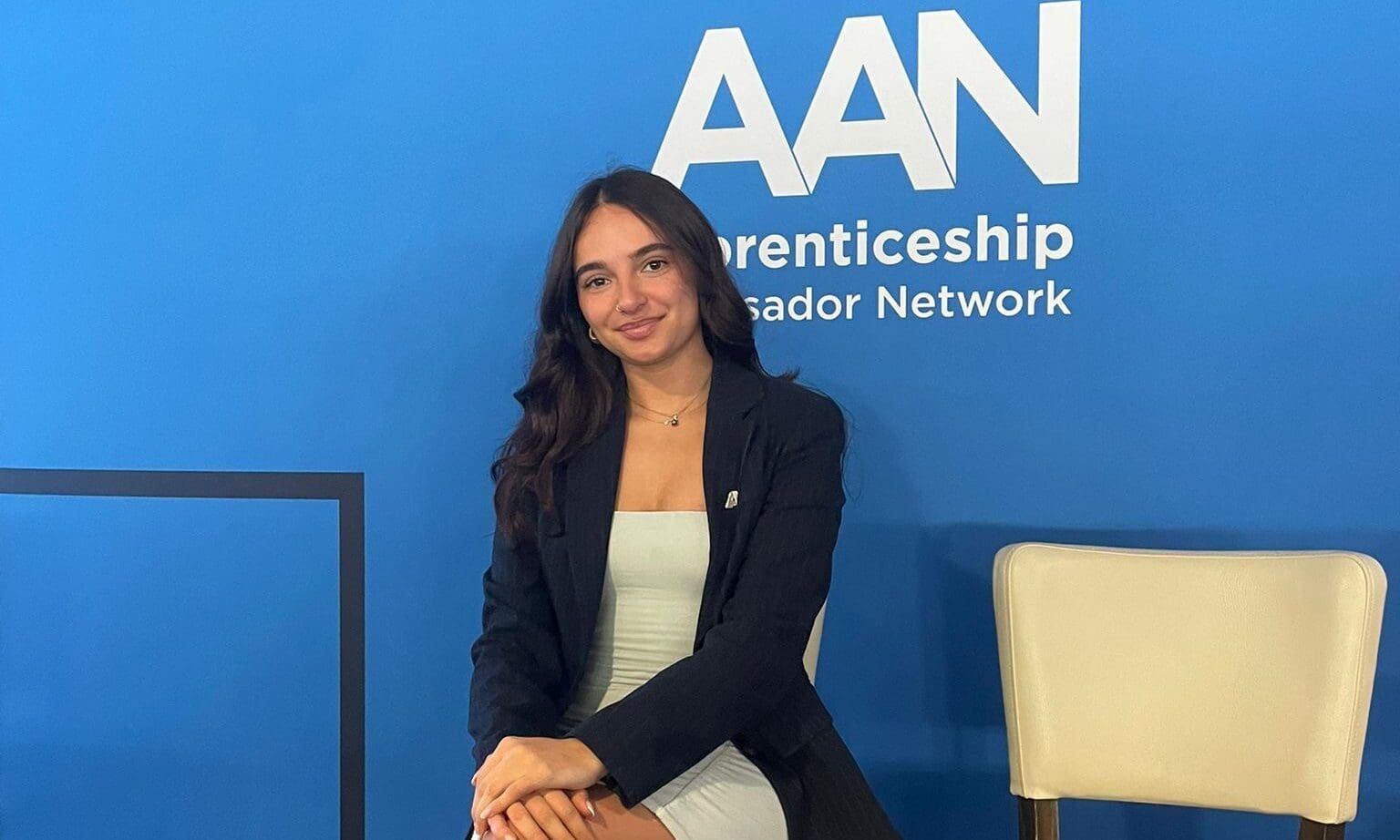
Grace Hardy was 19-years-old when she got her first payslip. It was £1,667 before tax and to her, it was the most money she had ever seen. The only issue was no one had ever told her what to do next. In her own words, she admits: “I didn’t know about budgeting. Or saving. Or what half the deductions meant. I just knew I had money and I needed to make it last.”
Now at 22, Hardy runs her own accounting firm and is leading a national push to fix what she calls “a dangerous gap” in British education: the absence of financial literacy. Her campaign, launched during this year’s My Money Week (9 – 13 June), calls on education secretary Bridget Phillipson to back a new Financial Education Bill – one that would make money management a core part of every child’s learning, starting as early as age seven.
The numbers back Hardy’s ambition up. Two-thirds of adults say they never learned about personal finance at school. Among Gen Z, fewer than half feel financially secure, while only 13% trust schools to prepare them for the real world of money.
Hardy says she was lucky because she learned about finances during an internship programme, but she doesn’t think the basics of budgeting, credit, or compound interest should be left to luck.
When Hardy turned 21, she opened Hardy Accounting the same month. She had just come off an apprenticeship that paid £20k a year, yet the memory that drives her campaign is older: the day a teenage Hardy realised school had taught her nothing about money. “Financial education was never something taught in my household, and unfortunately, I didn’t encounter it in school either,” she recalls. That gap only became clear when her first payslip landed. “I was thrilled but also had a moment of, ‘Right, what now?’”
Hardy’s response was hands‑on. She started running workshops in local schools, packaging the basics such as credit cards, savings and ISAs into hour‑long sessions.
The apprenticeship, she says, filled the void. “Being in an accounting role helped immensely – I had exposure to how things like interest rates, savings accounts, and pricing structures work,” she says. She began quizzing friends and found most were flying blind. “I realised they lacked financial understanding – not through any fault of their own, but simply because it hadn’t been taught.”
Hardy’s response was hands‑on. She started running workshops in local schools, packaging the basics such as credit cards, savings and ISAs into hour‑long sessions. The reception convinced her the issue was bigger than one classroom. “Financial literacy shouldn’t just be for accountants; it’s knowledge that everyone needs and deserves to be taught to give them the best chance to succeed in their careers and in their personal lives.”
Her résumé is now part résumé, part manifesto. CEO at 22; founder of a grassroots education push; backed by the Association of Accounting Technicians (AAT); and, this summer, set to meet the former parliamentary chair for financial education. The mission, as she frames it, is simple: to close the “dangerous gap” left by a curriculum that promises 30 hours of money lessons and too often delivers a mere 48 minutes. Across the UK, financial literacy remains a glaring blind spot in education because trust in schools to provide effective financial education is alarmingly low. Just 13% of young adults say they believe schools prepare them well for managing money in the real world. This is despite a statutory requirement that financial education should be part of the curriculum.
In practice, however, the requirement applies only to a small fraction of students. State-funded schools represent about 10% of all English students. The majority – around 85% – attend academies, alongside private schools, which are not bound by the same rules. As a result, the reach of financial literacy education is patchy at best.
This gap has real consequences. Not just for individuals managing household budgets, but for the wider economy.
Where financial education does happen, its depth often falls short. The recommended minimum teaching time is 30 hours. In many schools, the reality is closer to 48 minutes. This massive disparity leaves many young people without the basic knowledge to understand credit, savings, or budgeting when they leave the classroom. Even adults struggle with basic concepts: research from the London Foundation for Banking and Finance shows that only seven in 10 people say they understand how savings accounts work.
This gap has real consequences. Not just for individuals managing household budgets, but for the wider economy. Without foundational financial skills, Hardy worries that the next cohort of young people risk entering adulthood vulnerable to debt, poor credit and financial insecurity.
In that respect, she believes that accountants are uniquely placed to understand the consequences of financial illiteracy. They see first-hand how poor money management leads to mounting debt, failed businesses and personal hardship. For many in the profession, that insight fuels a sense of responsibility to act. “Especially in today’s digital age, I think it’s vital for accountants to share their knowledge with those who may not have access to it or feel overwhelmed by financial jargon,” Hardy says. “We’re trained professionals – we’ve studied hard, passed exams, and are regulated. That knowledge shouldn’t just stay within the profession; it should be shared.”
Her campaign has attracted support from the AAT, which recognises the urgency of improving financial literacy nationwide. Hardy is also scheduled to meet with the former parliamentary chair for financial education to explore ways accountants can help shape the reform agenda. This growing momentum reflects a broader trend within the industry. More accounting firms and professionals are launching initiatives in the form of workshops, mentoring and digital resources to make financial education accessible outside traditional classrooms.
Among young professionals, Hardy says, there’s been a “groundswell of support”. Her ongoing survey of over 1,000 respondents aims to capture attitudes toward financial education and identify effective ways for the accounting sector to contribute.
A key feature of the reform would be to introduce financial literacy lessons starting at age seven, embedding basic concepts early in primary education.
The proposed Financial Education Bill aims to transform how money management is taught across the UK. Spearheaded by education experts like Liberal Democrat MP Layla Moran, the Bill would make financial education mandatory in all public schools, academies and private schools, which would mark a major shift from the current system. At present, financial education is only required in state schools, which account for about 10% of English students. The Bill seeks to close this gap by including the roughly 90% of students attending academies and private schools, where such teaching is currently optional or inconsistent.
A key feature of the reform would be to introduce financial literacy lessons starting at age seven, embedding basic concepts early in primary education. Hardy stresses that knowledge of money management is not a niche skill for accountants alone but essential for everyone seeking stability in an increasingly complex financial world. This early start is designed to build a foundation that students can develop as they progress through school.
Moran highlights the scale of change needed, saying, “A much-discussed Financial Education Bill would seek to integrate comprehensive financial education further into the school curriculum by making it mandatory in public schools, academies and private schools. It would also start the teaching of financial education from the age of seven in primary schools.”
Hardy is focused not just on legislation but on improving the quality and quantity of financial education. Her goals for the next 12 to 18 months include establishing clear benchmarks to raise teaching standards and extending support to young adults aged 18 to 24 who missed out on this education. Hardy’s campaign is also conducting large-scale research, surveying over 1,000 young people and partnering with organisations like Blackbullion to deepen understanding of financial literacy attitudes and needs.
The reform aims to ensure financial education is not just a token part of the curriculum, but a meaningful and consistent presence throughout a young person’s schooling. Research from the Confederation of British Industry (CBI) and fintech company GoHenry estimates that prioritising financial education could add nearly £7bn a year to the UK, citing that better money management means fewer costly mistakes, less unnecessary borrowing, and more disposable income spent within local businesses.
Hardy stresses that knowledge of money management is not a niche skill for accountants alone but essential for everyone seeking stability in an increasingly complex financial world.
On an individual level, the consequences of poor financial literacy are significant. Without a clear understanding of credit, savings and investment, many young people face long-term financial insecurity. The ripple effects touch the accountancy profession as well. When clients struggle with basic financial decisions, accountants often find themselves picking up the pieces by helping to manage debt, restructure finances, or navigate complex borrowing.
For many, financial literacy is a foundation for career success and personal wellbeing. Hardy stresses that knowledge of money management is not a niche skill for accountants alone but essential for everyone seeking stability in an increasingly complex financial world.
Hardy’s advice to young people finishing school without financial literacy is straightforward. “Talk to a professional, or at the very least, start exploring the many free resources that are out there,” she says. “Organisations like AAT and Sage offer excellent, regulator-backed materials. There are also countless webinars and educational platforms run by individuals who are passionate about financial literacy.”
She acknowledges the challenge can feel overwhelming, but encourages starting small. “It can feel overwhelming, but there’s real value in just starting. Even small steps can lead to meaningful progress.”
For Hardy and her growing network of supporters, the goal is to make financial education a guaranteed right for every young person. The fight for financial literacy is about equipping a generation to take control of their future adult lives and their careers.