






Register to get free articles
Want unlimited access? View Plans
Already have an account? Sign in
The UK’s research and development tax regime has entered a period of profound change. After years of rapid growth, the system has been reshaped by reform, tighter oversight and rising scrutiny from regulators. For the firms that advise innovative businesses, the challenge is no longer simply understanding tax rules. Increasingly, it is about understanding innovation itself.
Against this backdrop, RCK Partners has launched a new Innovation Advisory Council designed to bring industry expertise directly into its advisory model. The London-based firm says the council will provide sector-specific insight to businesses navigating the R&D landscape, drawing on senior figures from technology, life sciences, manufacturing and defence.
The initiative reflects a wider shift within the advisory profession as firms adapt to a more demanding regulatory environment. Reforms introduced by HMRC have merged the SME and RDEC schemes, introduced additional reporting requirements and intensified scrutiny of claims. According to HMRC’s latest statistics, the enquiry rate reached 17% in the year to 2024 as the authority stepped up efforts to tackle fraud and error.
Sophie Spells, chief executive of RCK Partners, says the decision to establish the council reflects how the R&D market itself has evolved.
“In the R&D tax credit space, our clients operate across many sectors. It’s largely sector-agnostic, particularly given how embedded technology and innovation now are across industries,” she explains. “Because of that, we always need to stay one step ahead and truly understand the innovation taking place within our clients’ businesses.”
Spells describes the Innovation Advisory Council as part of what she calls a “layered advisory model”, designed to complement the firm’s existing technical capabilities with deeper sector knowledge.
A new advisory model for a changing R&D landscape
“The Innovation Advisory Council is about advisory excellence,” she says. “We’ve built a network of senior advisers who bring deep, first-hand industry experience. Their insight complements our internal expertise and ensures greater depth than a traditional R&D provider model.”
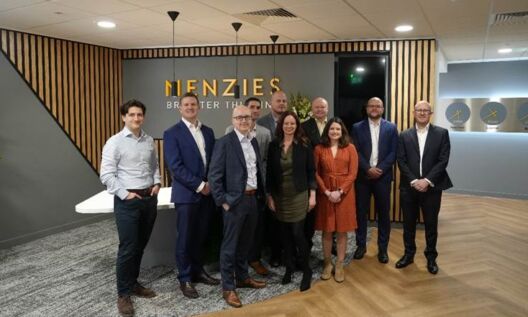
The council includes a number of senior business figures with experience leading innovation-driven organisations, among them Carla Stent, Darren Purkis and Rebecca DeNiro. The group will work alongside the firm’s non-executive directors, including Philip Hammond and Iain McNicol, with Spells chairing the council.
“At a broader level, bringing together an experienced group of external voices not only strengthens governance, but significantly sharpens sector understanding and enhances credibility.” – Paul Lodder, VP of accounting product strategy at Dext
What the firm hopes to capture is not simply reputation but lived operational experience of innovation. The advisers, Spells says, have spent their careers inside the industries RCK’s clients operate in and understand the technical and commercial realities those businesses face.
“They’ve worked in these sectors. They understand the technical language, the challenges and the growth journeys of innovative businesses,” she says. “That enables us to speak our clients’ language even more effectively and ultimately support stronger, higher-quality R&D claims.”
The council will also play an outward-facing role. RCK plans to use the group to host roundtables, industry discussions and knowledge-sharing events that bring together advisers and business leaders working across innovation-intensive sectors. According to Spells, “It’s about creating a space where advisers and business leaders can exchange ideas and shape best practice across the innovation ecosystem.”
Reform reshapes the R&D claims environment
The timing is deliberate. Over the past several years, the UK’s R&D tax system has undergone one of the most significant periods of reform since its creation. While the government has sought to protect the incentive as a tool for innovation, it has also moved to clamp down on widespread abuse within the scheme.
For legitimate claimants, the result has been a more complex and sometimes uncertain environment. While Spells concedes that the reforms were necessary due to high fraud and error rates, she has seen the changes create understandable concern among genuine claimants.
Several elements of the new regime have changed the practical realities of making a claim. “Key issues include the merged scheme, reduced benefit rates and the introduction of the claim notification form, which shortens the window in which businesses can notify HMRC of their intention to claim,” Spells explains. “Combined, these changes mean lower rates and tighter deadlines.”
At the same time, the evidentiary standard expected of businesses has increased significantly. Companies are now expected to maintain detailed, contemporaneous documentation of their R&D activities and the technical uncertainties they are attempting to resolve.
“It’s now more important than ever for claimants to engage early with a specialist adviser,” Spells says. “Pre-filing documentation and robust record-keeping are critical. Businesses must maintain detailed contemporaneous evidence, more rigorously than many did historically.”
The risk of enquiries has also become a defining concern. Increased scrutiny means claims are more likely to be examined in detail before relief is granted, a process that can be both time-consuming and disruptive for companies focused on growth.
“HMRC is scrutinising claims more closely and issuing more information requests before payments are made,” Spells says. “While scrutiny is welcome and necessary, enquiries can be lengthy and resource-intensive, which naturally creates anxiety for businesses.”
In response to the changing environment, RCK has expanded its compliance capability, including building a team that includes former HMRC R&D inspectors. The aim is to strengthen the firm’s ability to ensure claims meet the higher evidentiary threshold now expected by the tax authority.
The firm is also moving away from what Spells describes as a transactional model of R&D advisory, saying, “We are moving away from a once-a-year process and towards becoming a trusted partner that supports clients throughout the year as projects develop.”
A wider shift across the accounting profession
RCK is not alone in reconsidering how innovation advice is delivered. Across the accounting profession, firms are experimenting with new structures designed to combine tax expertise with sector insight and technical credibility.
RSM UK has expanded its innovation reliefs team by recruiting software specialists and technical partners who can assess the scientific validity of claims alongside tax advisers. Azets has taken a more policy-oriented approach, establishing an advocacy initiative focused on influencing government thinking on the future direction of the R&D regime. Meanwhile, PwC UK has developed cross-sector advisory networks that combine industry specialists with former HMRC officials.
Together, these developments suggest a broader evolution in the way R&D advice is structured. Where the market once focused primarily on technical tax interpretation, firms are increasingly emphasising governance, credibility and sector expertise.
Paul Lodder, VP of accounting product strategy at Dext, views the emergence of advisory councils as a change in what clients now expect from professional advisers.
“The formation of private advisory councils such as the IAC reveal that clients now see technical delivery as the baseline and broader strategic insight as the real value,” he says. “At a broader level, bringing together an experienced group of external voices not only strengthens governance, but significantly sharpens sector understanding and enhances credibility.”
Yet the model is not without its potential pitfalls, according to Lodder. As more firms launch advisory boards and expert panels, the risk is that these structures become symbolic rather than substantive.
“There is a danger that as more firms launch councils, they become vanity projects rather than value-adders which completely minimises their impact,” Lodder explains. “The real differentiator will be whether these groups provide tangible input into client outcomes and firm strategy, rather than simply serving as a signal of ambition.”
For Spells, the value of the Innovation Advisory Council will ultimately be judged by the difference it makes to clients navigating an increasingly demanding system. She wants to see clients benefit from deeper sector insights, more informed strategic discussions and stronger governance around their claims.
“We always need to stay one step ahead and truly understand the innovation taking place within our clients’ businesses.” – Sophie Spells, chief executive of RCK Partners
Instead of approaching R&D claims as a once-a-year administrative exercise, Spells also stresses the firm’s goal to develop a more continuous relationship with innovative businesses as their projects evolve.
“That means understanding projects as they develop, advising proactively and helping clients maintain the documentation standards required in today’s environment,” she says. “Ultimately, it should lead to more robust claims, reduced risk of enquiry and greater strategic alignment between innovation activity and funding.”
Beyond individual claims, the discussion also touches on a broader economic question. The UK has long relied on R&D tax incentives as a central tool for encouraging innovation and attracting investment. But as other jurisdictions strengthen their own incentives, maintaining that competitiveness is not guaranteed.
“When you compare the UK to countries such as Ireland, where the incentive can be significantly more generous, the UK must ensure it remains attractive for innovative companies,” Spells points out. “If incentives weaken too much relative to other jurisdictions, companies may look to relocate elements of their R&D activity abroad.”
In that sense, the Innovation Advisory Council is not only about strengthening a firm’s internal capabilities. It also reflects a recognition that the environment surrounding innovation is becoming more complex, more scrutinised and more strategically important.
For Spells, success will be measured by whether the council becomes an active and embedded part of that ecosystem. “Success would mean the council is fully ingrained within our organisation and accessible to our client base,” she says. “If it enhances client centricity, improves claim quality and supports sustainable innovation growth, then it will have achieved its purpose.”