






Register to get free articles
Want unlimited access? View Plans
Already have an account? Sign in
Nearly 80% of chartered accountants lack confidence in the health of the Scottish economy and are calling for government action to make Scotland a more attractive place to do business, according to a survey by the Institute of Chartered Accountants of Scotland (ICAS).
In the first poll conducted since the January 2026 Scottish Budget, only 6% of respondents expressed confidence in the current economic state, while 78% stated they were not confident.
The findings highlight a call for the Scottish Government to implement a long-term economic and tax strategy, a priority identified by 63% of respondents.
Other key areas for government focus included support for the business services sector and a greater emphasis on vocational skills and workplace learning.
The data follows ICAS’s formal response to the Scottish Budget, which argued that incremental tax changes fail to provide the strategic clarity required for sustainable growth.
The survey was conducted between 14 and 20 January 2026 and involved 250 ICAS members.
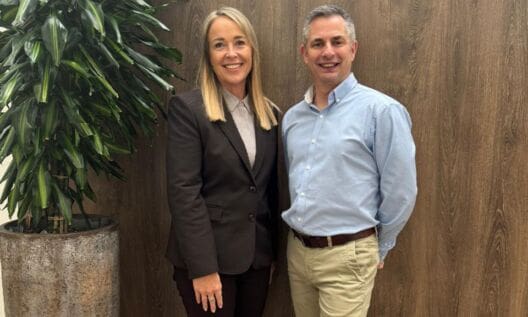
Gail Boag, who took office as the first female chief executive of ICAS on 1 January 2026, noted that policy uncertainty is impacting transparency and confidence within the business community.
One ICAS member said: “Scotland needs a lower tax environment, with incentives for businesses to locate here, to attract entrepreneurs and increase productivity. There also has to be much more emphasis on education and training to build an attractive employee base.”
Boag added: “Our findings reveal deepening concern among chartered accountants about the lack of a clear, long-term economic strategy for Scotland. ICAS members work at the heart of the business community as trusted advisors, so are witnessing first-hand how policy uncertainty and short-term changes are eroding confidence and transparency in the economy.
“With the Scottish elections approaching, the next government must take decisive action beyond incremental tax tinkering and set out a more coherent economic vision. One that delivers tax stability, supports key growth sectors, and invests in skills to strengthen Scotland’s long-term competitiveness.”